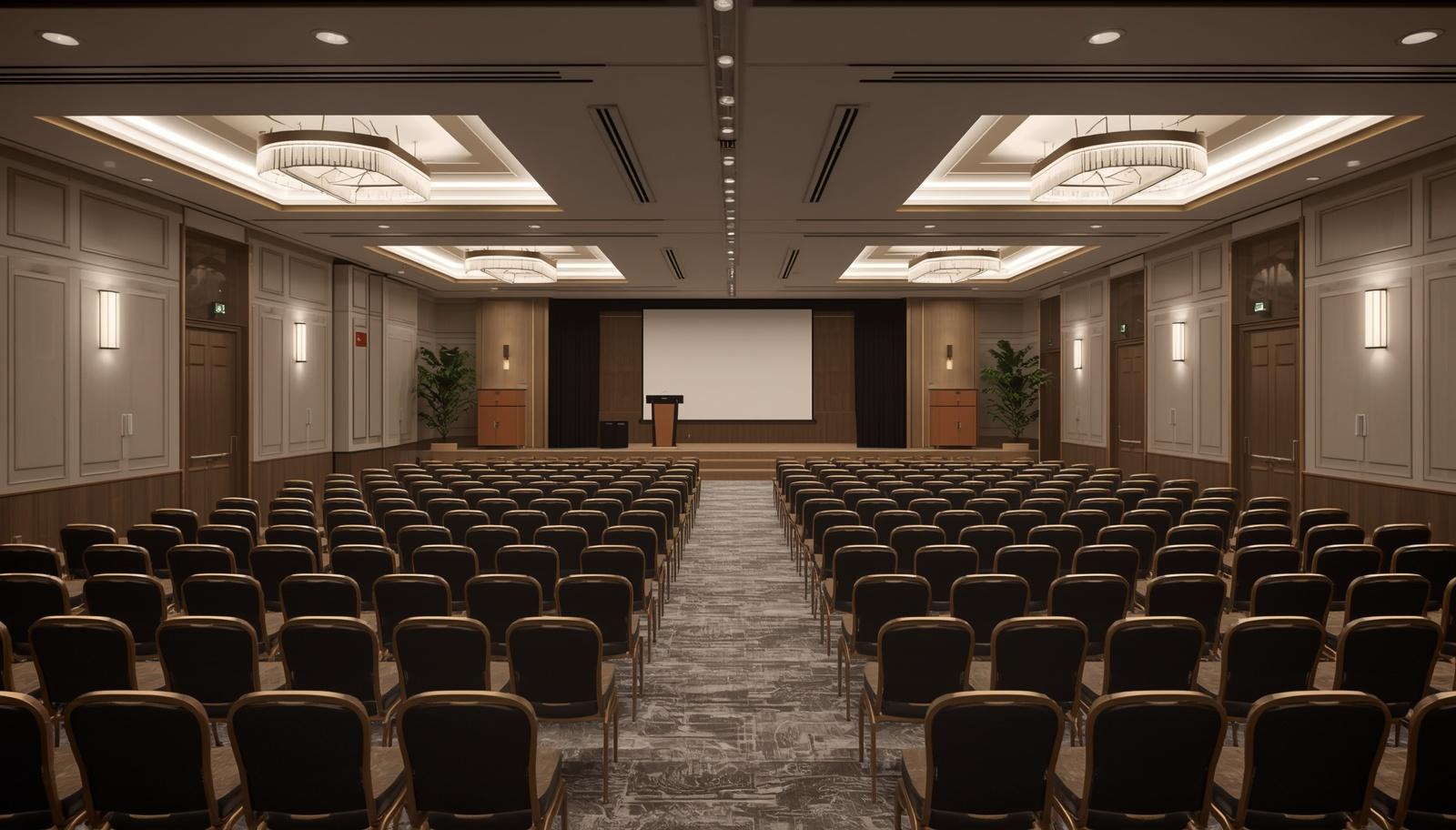
Every venue has
sustainable features.
Permanent spaces. In-house equipment. Exclusive catering.
The infrastructure that makes your property efficient is the same infrastructure that drives low-emission events.
Structured for NZCE • CDP • GHG Protocol • CSRD compliance
Events defaulted measurement to the venues.
For critical information, the events industry has relied on venues to provide the metrics. While more requests are coming in, the tools to measure them have not changed in 30 years, with venues stuck in the middle of it, responsible for providing metrics for events where decisions are outside their control.
Energy
Venues measure energy using building-level utility data: monthly kWh totals, peak demand charges, and HVAC load estimates. None of it isolates what a single event consumed. When planners ask for event-level energy data, the venue is left estimating from square footage and hours.
Water
Water usage is tracked at the meter for the entire property. Venues estimate event consumption by catering headcount, restroom proximity, and kitchen volume. There is no sub-metering at the event level, so every number reported is an approximation.
Waste
Waste is measured by what leaves the loading dock: hauler weight tickets and dumpster pulls that cover the full property. Attributing diversion rates, recycling volumes, or composting weights to a specific event requires manual sorting and back-of-house estimates that rarely hold up to scrutiny.
Your property runs sustainability programs every day. None of them show up in event reports.
Your building was designed to be efficient. The lighting, the HVAC, the equipment you rotate across events, the catering partners you've vetted for years. All of it reduces waste, lowers emissions, and keeps costs down. You already know this.
But when an event planner asks for a sustainability report, none of that shows up. The reports they receive measure what leaves the building: utility totals, dumpster pulls, headcount estimates. They were never built to capture what the building already provides.
That's the gap. Not a performance gap, a reporting gap. Green Analytics closes it by reading the planning documents that already exist and turning them into the certified report your property has never had.
Green Analytics moves measurement from post-event outputs, to production documents.
It reads the planning documents that already exist (contracts, BEOs, power orders, catering specs) and produces the certified report. Three areas of your property are already sustainable. Output-based reporting has just never shown it.
Each of the areas below represents infrastructure your property already invested in, and each one becomes a documented sustainability asset when measurement moves to production.
Build your venue profile. Document what you already operate.
Your property runs sustainability programs every day: permanent spaces, circular equipment inventories, exclusive partners, installed energy systems, waste diversion infrastructure. Green Analytics documents all of it in a CDP-aligned Scope 1–3 framework, structured to NZCE and EIC standards, with EPA Portfolio Manager benchmarking built in.
Establish Your Baseline
We document your core operational metrics (energy, water, waste, supply chain, fleet) and structure them as CDP-aligned Scope 1–3 emissions accounting with EPA Portfolio Manager registration.
Map Your Circular Assets
Permanent spaces, in-house equipment inventories, exclusive service partners, preferred vendor networks. Every circular asset documented and attributed for the first time.
Publish Your Venue Profile
Your certified venue profile becomes a permanent marketing and procurement asset, discoverable by planners, citable in proposals, and built from verified operational data rather than utility estimates.
The result is a certified venue sustainability profile: the same framework Fortune 500 corporations use for global disclosure, scaled to your property and available to every venue, large or small.
Start building your venue profile.
Tell us about your property and we'll outline what your profile looks like. No cost, no commitment.
Start building your venue profile
Tell us about your property and we'll outline what your profile looks like.